Beginner Strength Training Workout At Home
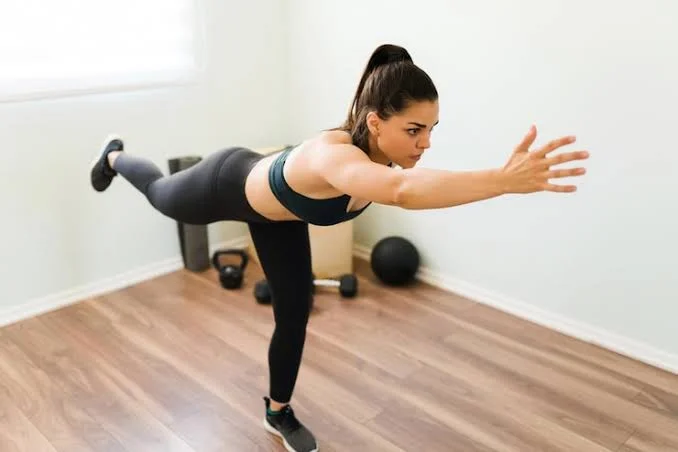
Starting strength training at home is one of the most practical decisions you can make for your health. You do not need a gym membership, expensive equipment, or hours of free time. What you need is a clear plan and the willingness to show up a few times each week.
This guide walks you through everything a beginner needs to know. You will learn why strength training matters, how to set up your space, which exercises to do, and how to make progress without hurting yourself. By the end, you will have a complete workout you can start today.
Why Strength Training Matters More Than You Think?
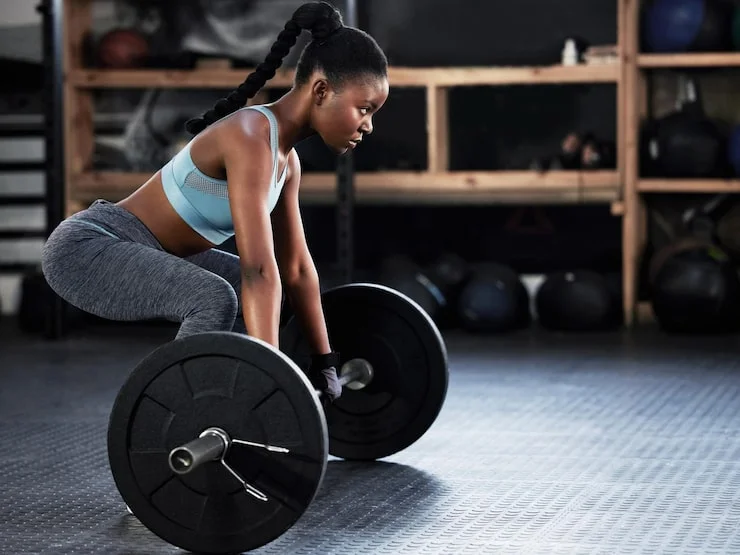
Many people focus only on walking or cycling for fitness. These activities help your heart and lungs, but they do very little for your muscles and bones. Strength training fills that gap.
When you challenge your muscles against resistance, several things happen. Your muscles get stronger and larger. Your bones become denser, which lowers your risk of fractures later in life. Your posture improves because the muscles that hold you upright get stronger. Even your metabolism gets a boost, since muscle tissue burns more calories at rest than fat tissue does.
The mental benefits matter too. Regular strength training reduces stress and anxiety. It improves sleep quality. Many people find that the confidence they build in the gym carries over into other parts of their lives.
For beginners, these changes start showing up within a few weeks. You do not need to wait months to feel a difference.
Setting Up Your Home Workout Space
You do not need much room. A space the size of a yoga mat works fine. Find a spot with enough clearance to lie down and stretch your arms overhead without hitting anything.
Equipment is optional at this stage. Your body weight provides plenty of resistance for most beginner exercises. If you want to add a bit of load, you can use items you already have. A filled water bottle, a backpack with books, or a bag of groceries all work as weights.
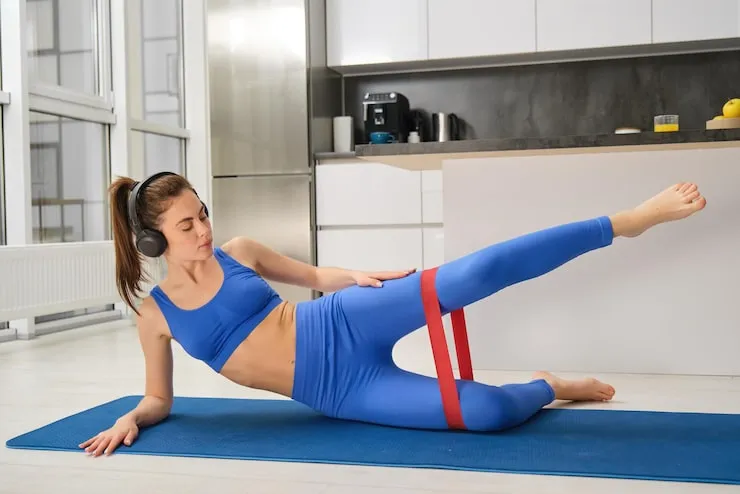
If you decide to buy something, resistance bands are a good first purchase. They are cheap, portable, and gentle on your joints. A single band can support dozens of exercises for your entire body.
How Often Should You Train?
Two or three sessions per week is the right starting point for most beginners. This gives your muscles time to recover between workouts. Recovery is when your body actually builds new muscle tissue, so rest days are not wasted time.
Start with two sessions per week for the first two weeks. If you feel good and your schedule allows, add a third session. Pay attention to how your body responds. If you feel worn down or your performance drops, scale back to two days.
Each session should take about 20 to 30 minutes when you are starting. That includes a warm-up and cool-down. As you get stronger and add exercises, sessions may stretch to 40 minutes. That is still a small commitment for the benefits you get.
The Warm-Up: Five Minutes That Protect Your Body
Skipping the warm-up is tempting when you are short on time. Do not do it. Cold muscles are more likely to strain or tear. A proper warm-up raises your heart rate, loosens your joints, and prepares your nervous system for work.
Here is a simple warm-up you can do in five minutes:
March in place for one minute. Lift your knees to hip height and swing your arms naturally.
Arm circles for 30 seconds. Extend your arms to the sides and make small circles forward, then backward.
Torso twists for 30 seconds. Stand with feet shoulder-width apart and rotate your upper body side to side.
Bodyweight squats for one minute. Lower yourself as if sitting in a chair, then stand back up. Keep the movement smooth and controlled.
Light jogging or skipping for the remaining time. Stay in place and keep the intensity easy.
You should feel warm and slightly loose when you finish. If you feel tired, you warmed up too hard.
You May Also Like: 30 Minute Full Body Workout At Home
The Main Workout: Seven Exercises for Your Whole Body
This routine hits every major muscle group. Do the exercises in order. Rest for 30 to 60 seconds between each one. Complete two or three rounds of the entire circuit depending on your energy level.
Squats
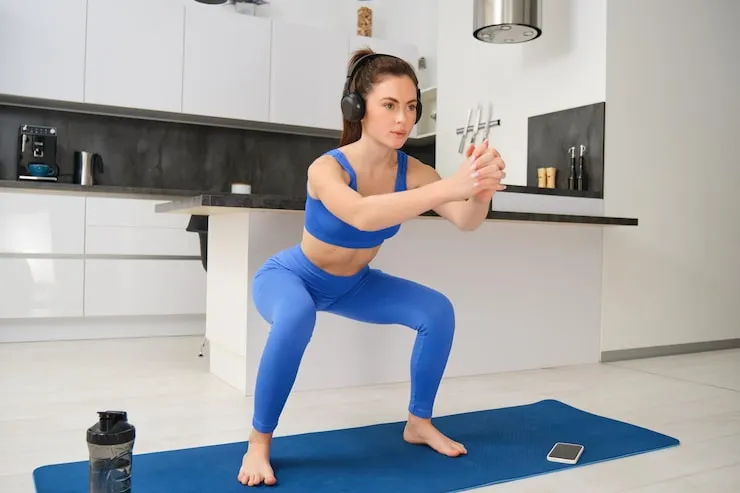
Squats work your thighs, hips, and glutes. They also teach you how to move your hips properly, which carries over into everyday activities like getting out of a chair or picking something up from the floor.
Stand with your feet shoulder-width apart. Point your toes slightly outward. Push your hips back as if you are sitting into a chair. Lower yourself until your thighs are roughly parallel to the floor. Keep your chest up and your knees behind your toes. Push through your heels to stand back up.
If this feels hard, hold onto a doorframe or the back of a chair for balance. You can also sit down onto a chair and stand back up instead of squatting in open space.
Do 12 to 15 repetitions.
Push-Ups
Push-ups build your chest, shoulders, and triceps. They also force your core to work hard to keep your body straight.
Place your hands on the floor slightly wider than your shoulders. Keep your body in a straight line from your head to your heels. Lower your chest toward the floor by bending your elbows. Stop when your chest is a few inches from the ground. Push back up to the starting position.
If a full push-up is too hard, drop your knees to the floor. You can also place your hands on a sturdy table or counter and do an incline push-up. This reduces the amount of body weight you are pressing.
Do 8 to 12 repetitions.
Glute Bridges
Glute bridges target your glutes and hamstrings. They are gentle on your back and excellent for people who sit a lot during the day.
Lie on your back with your knees bent and your feet flat on the floor. Your heels should be close to your hips. Press through your heels and lift your hips toward the ceiling. Squeeze your glutes at the top. Hold for a second, then lower back down with control.
Do 12 to 15 repetitions.
Lunges
Lunges strengthen your legs one at a time. They also improve balance and coordination, which matters more as you get older.
Stand tall with your feet together. Step forward with your right foot. Lower your body until both knees form roughly 90-degree angles. Your back knee should hover just above the floor. Push off your front foot to return to standing. Repeat on the other leg.
If you feel unsteady, hold onto a wall or chair with one hand. You can also shorten your step to make the movement easier.
Do 8 to 10 repetitions per leg.
Plank Shoulder Taps
This exercise challenges your core and shoulders at the same time. It teaches your body to stay stable while your limbs move, which is how you use your core in real life.
Start in a push-up position with your hands directly under your shoulders. Keep your feet slightly wider than hip-width for stability. Lift your right hand and tap your left shoulder. Return your hand to the floor. Then lift your left hand and tap your right shoulder. Keep your hips as still as possible throughout.
If this is too hard, do the exercise on your knees instead of your toes. You can also hold a plank without the taps and build up your stability first.
Do 10 taps per side.
Tricep Dips
Tricep dips work the back of your arms. They also engage your shoulders and chest.
Sit on the edge of a sturdy chair or bench. Place your hands next to your hips with your fingers pointing forward. Slide your hips off the edge so your arms support your weight. Bend your elbows to lower your body a few inches. Push back up to the starting position.
Keep your back close to the chair as you lower. If you feel pressure in your shoulders, reduce how far you lower yourself.
Do 8 to 12 repetitions.
Bicycle Crunches
This move targets your abdominal muscles, including the sides of your waist.
Lie on your back with your hands behind your head and your knees bent. Lift your shoulders off the floor. Bring your right elbow toward your left knee while extending your right leg. Switch sides in a controlled pedaling motion. Do not pull on your neck with your hands.
Do 10 to 12 repetitions per side.
How to Cool Down After Your Workout?
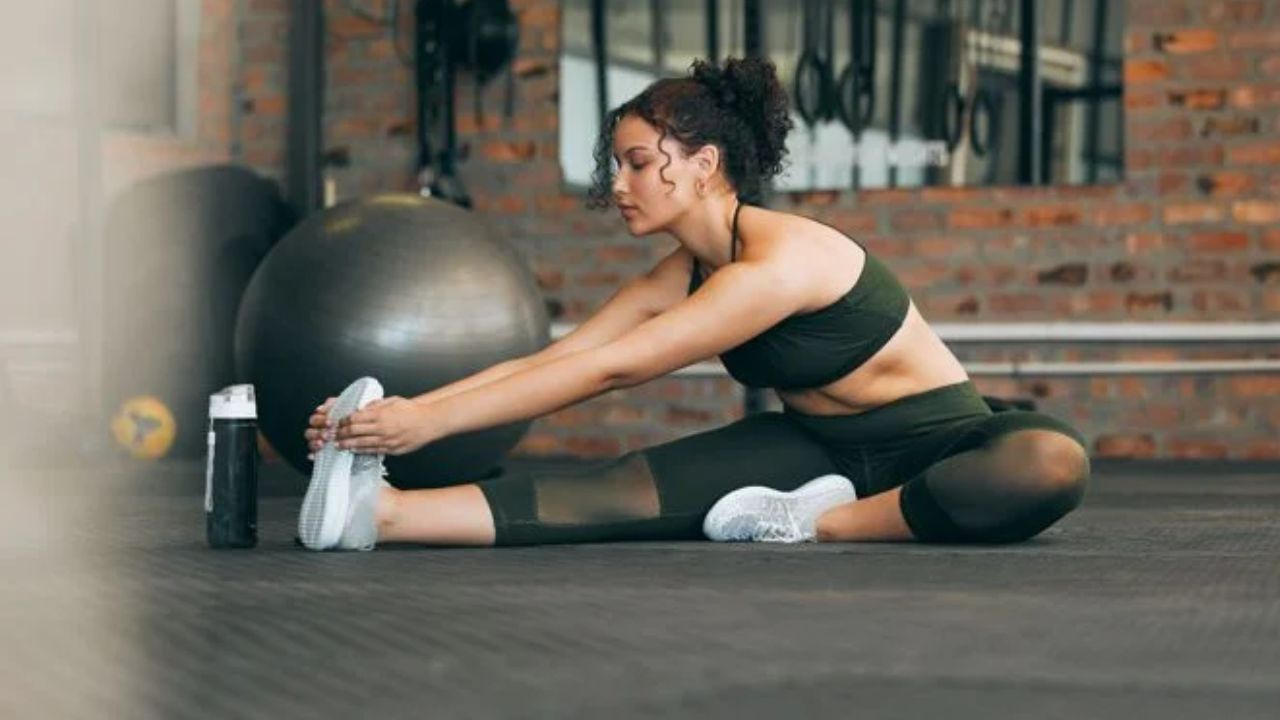
- Stretching after your workout helps your muscles relax and return to their normal length. It also gives you a few minutes to breathe and transition back to the rest of your day.
- Hold each stretch for 20 to 30 seconds. Do not bounce. Breathe deeply and let your muscles release.
- Hamstring stretch: Sit on the floor with one leg extended and the other bent. Reach toward your toes on the extended leg. Switch sides.
- Quad stretch: Stand and hold onto a wall. Pull one foot toward your glutes. Switch sides.
- Shoulder stretch: Bring one arm across your chest and gently pull it closer with your other arm. Switch sides.
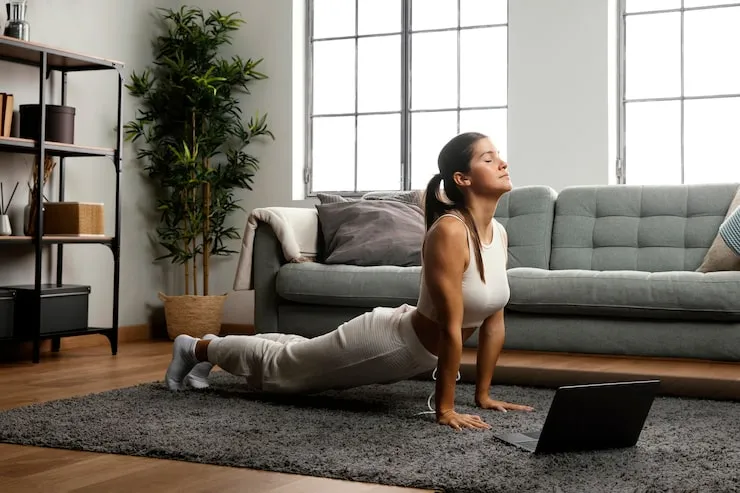
- Cat-cow stretch: On your hands and knees, alternate between arching your back up and letting it sag down. Move slowly with your breath.
Read: 5 Day Workout Split Each Muscle Twice A Week
How to Make Progress Without Getting Hurt?
The biggest mistake beginners make is doing too much too soon. You might feel motivated after your first workout and decide to double the volume next time. This leads to soreness, fatigue, and often quitting.
Progress slowly. The goal is to do a little more each week, not to exhaust yourself in one session.
Here is how to make exercises harder when they start feeling easy:
Add repetitions. If you are doing 10 push-ups, work up to 12 or 15.
Slow down the movement. Take three seconds to lower yourself during a squat instead of one. This increases the time your muscles spend working.
Change the angle. Move from knee push-ups to incline push-ups, then to full push-ups.
Add weight. Hold a water bottle or book during lunges and squats.
The key is to record what you do each session. Write down the exercises, the number of repetitions, and how you felt. Next time, try to beat one of those numbers by a small amount. This is how strength builds over weeks and months.
Common Beginner Mistakes to Avoid
- Holding your breath. Breathe out during the hard part of the movement and in during the easy part. Holding your breath raises blood pressure and makes you tire faster.
- Rushing through reps. Slow, controlled movements build more strength and are safer for your joints. Speed comes later.
- Skipping warm-ups. Five minutes of preparation prevents weeks of recovery from an injury.
- Training through pain. Muscle fatigue feels like burning or trembling. Pain feels sharp or stabbing. If something hurts, stop.
- Comparing yourself to others. Your only competition is the person you were last week. Everyone starts somewhere.
Conclusion
Beginner strength training at home works. It is convenient, affordable, and effective. You do not need fancy equipment or a lot of time. You need a plan, a small space, and the patience to let your body adapt.
Start with two sessions per week. Do the seven exercises in this guide. Warm up before and cool down after. Add a little challenge each week. Within a month, you will notice a difference in how you move and how you feel.