30 Minute Full Body Workout At Home
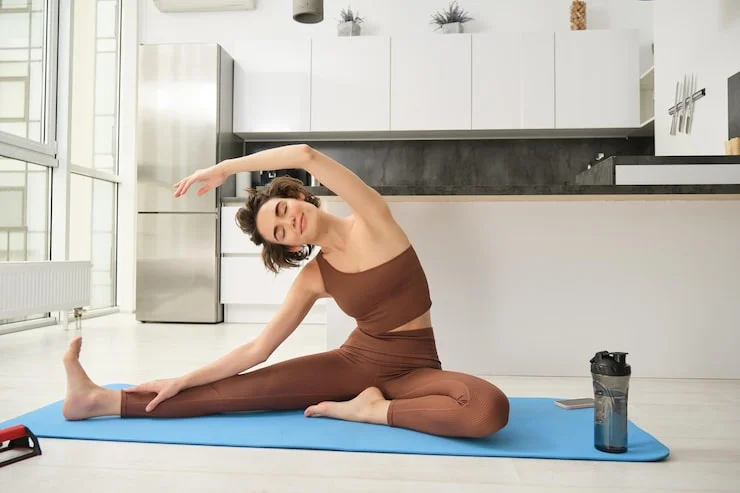
Finding time to exercise can feel impossible when your schedule is full. Between work, family, and everything else pulling at your attention, setting aside an hour for the gym often does not happen. That is exactly why a 30 minute full body workout at home makes sense for so many people.
You do not need fancy machines. You do not need a gym membership. You do not even need much space. What you need is a clear plan, a little floor space, and the willingness to show up for yourself three or four times a week.
This article gives you everything you need to start. You will learn why this approach works, how to structure your 30 minutes, and what exercises to do. You will also find tips on how to make the workout easier or harder depending on where you are right now.
Why 30 Minutes Is Enough?
Many people believe that a workout only counts if it lasts an hour or more. That idea keeps a lot of people from starting at all. The truth is that your body responds to effort, not to the clock.
Research shows that short bursts of activity can improve focus and alertness, even when you are tired . Bodyweight training, which uses gravity instead of dumbbells, provides both cardiovascular and strength benefits . You do not need long sessions to get real results.
A well-structured 30 minute workout can support fat loss and muscle gain when you do it consistently . The key is doing it most days of the week, not just once in a while .
Think about it this way. Thirty minutes is about two percent of your day. You can find that time if you look for it. You can wake up thirty minutes earlier. You can use your lunch break. You can exercise while dinner cooks in the oven.
The real benefit of a shorter workout is that you will actually do it. A perfect hour-long routine that you skip does nothing for you. A good thirty-minute routine that you complete four times a week changes your body.
What You Need Before You Start?
One of the best things about this workout is how little you need. You do not have to buy anything.
You need enough floor space to lie down and stretch your arms without hitting furniture. A yoga mat is nice but not required. Carpet or a towel works fine. You need water nearby. You should wear clothes you can move in.
That is it. No dumbbells. No resistance bands. No bench.
If you want to add resistance later, you can use items around your home. A filled water bottle or laundry detergent jug can work as a weight . A bag of dog food or flour can substitute for a kettlebell . But for this workout, your own body provides all the resistance you need.
One more thing. Check with your doctor before starting any new exercise program, especially if you have injuries, health conditions, or have not exercised in a long time . This is not a formality. It is how you take care of yourself.
How to Structure Your 30 Minutes?
The workout breaks into three parts. This structure keeps you safe and makes the most of your time.
Warm-up: 5 minutes
Your warm-up prepares your body for work. It raises your heart rate, loosens your joints, and lowers your risk of injury. You will do movements that take your joints through their full range of motion.
Main workout: 20 minutes
This is where you build strength and burn calories. You will move through a circuit of exercises that work your entire body. You will do each exercise for a set amount of time, then rest briefly before the next one.
Cool-down: 5 minutes
The cool-down helps your heart rate return to normal. It also reduces muscle tension and helps you recover faster. You will hold stretches for a longer period here.
This structure works because it respects how your body actually functions . You warm up, you work, you cool down. Every good workout follows this pattern.
The Warm-Up (5 Minutes)
Do each movement for 30 seconds. Move at a comfortable pace. You should feel your body waking up, not straining.
March in place
Lift your knees to hip height. Swing your arms naturally. This gets your blood moving.
Arm circles
Extend your arms to the sides. Make small circles forward, then backward. Gradually make the circles bigger. Keep your arms straight but not locked .
Bodyweight squats
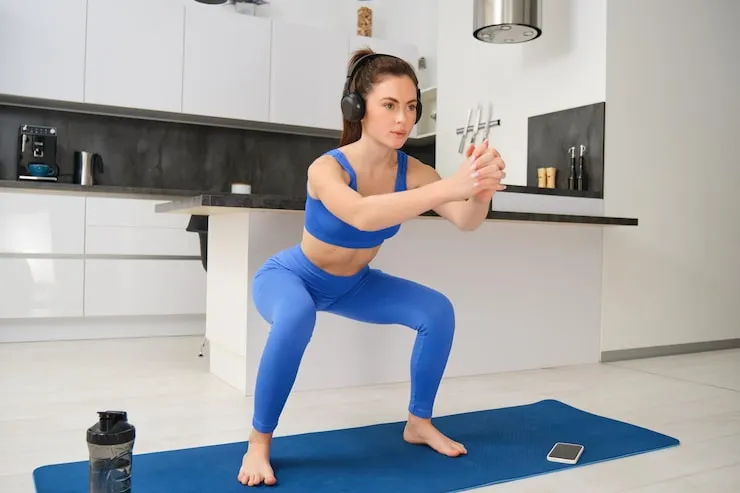
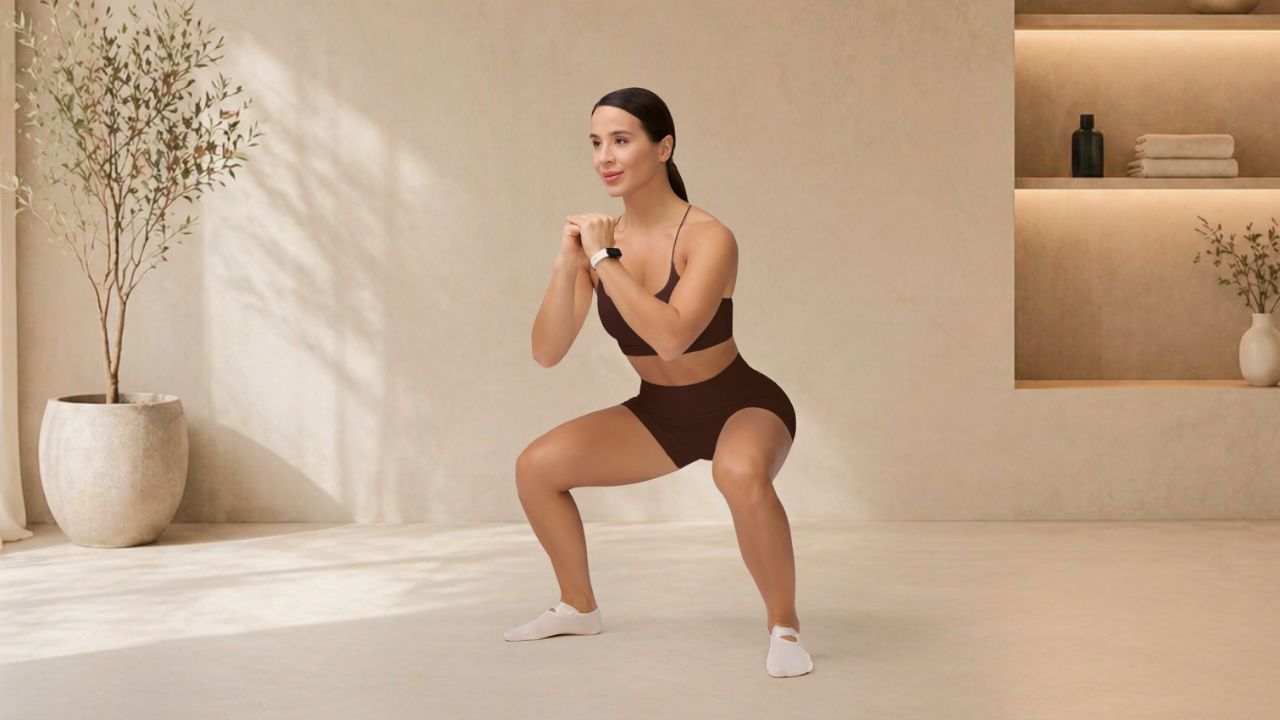
Stand with feet shoulder-width apart. Push your hips back as if sitting in a chair. Keep your knees behind your toes. Stand back up. Go slow and controlled .
High knees
Jog in place, driving your knees toward your chest. Keep a quick, light pace. This raises your heart rate .
Torso twists
Stand with feet planted. Twist from your waist, letting your arms swing naturally. This loosens your spine and core .
The Main Workout (20 Minutes)
This is a circuit. You will do five exercises in a row. Complete each exercise for 45 seconds, then rest for 15 seconds before moving to the next . After all five exercises, rest for 60 seconds. Then repeat the circuit. Aim for three rounds total.
If you are new to exercise, start with two rounds. If you are more experienced, add a fourth round.
1. Push-Ups
Push-ups work your chest, shoulders, triceps, and core at the same time. They are one of the most efficient exercises you can do .
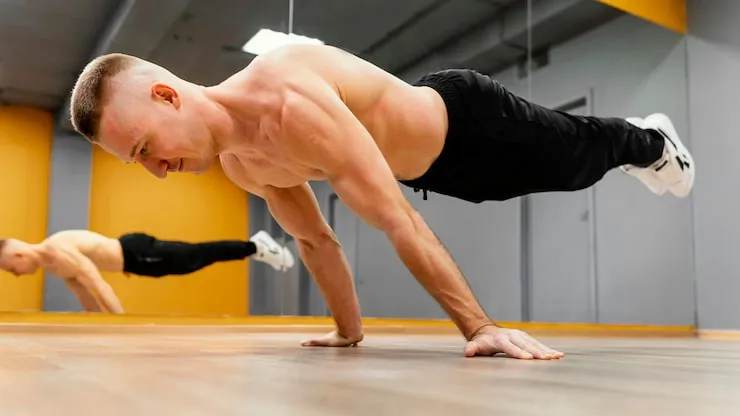
Start in a plank position with your hands under your shoulders. Your body should form a straight line from your head to your heels. Lower your chest toward the floor by bending your elbows. Keep your elbows at about a 45-degree angle from your body. Push back up.
If this is too hard, do knee push-ups. Drop your knees to the floor and keep your body straight from knees to head . If knee push-ups are still too hard, place your hands on a sturdy chair or counter and do incline push-ups.
What to focus on: Keep your body in a straight line. Do not let your hips sag or pike up. Your core should be working the entire time .
2. Bodyweight Squats
Squats work your quads, hamstrings, glutes, and calves. They are a fundamental movement pattern that carries over into everyday life .
Stand with feet shoulder-width apart. Push your hips back and down as if sitting in a chair. Keep your chest up and your knees behind your toes. Go as low as you comfortably can. Squeeze your glutes as you stand back up .
If squats bother your knees, do squats to a chair. Touch the chair lightly with your bottom, then stand back up. This controls how low you go .
What to focus on: Push through your heels as you stand. Keep your weight balanced across your whole foot. Do not let your knees cave inward.
3. Plank
The plank builds core strength. A strong core protects your back and improves your posture .
Place your forearms on the floor with your elbows under your shoulders. Your body should form a straight line from your head to your heels. Squeeze your glutes. Pull your belly button toward your spine. Breathe normally.
If a full plank is too hard, drop your knees to the floor . If you can hold a full plank easily, lift one foot off the floor for ten seconds, then switch.
What to focus on: Do not let your hips sag. Do not hold your breath. Keep your neck in line with your spine .
4. Reverse Lunges
Lunges work your legs one at a time. This helps correct muscle imbalances and improves balance .
Stand with feet hip-width apart. Step your right foot back. Lower your body until your left knee is bent about 90 degrees. Your right knee should hover just above the floor. Push through your left heel to return to standing .
If this is too hard, hold onto a wall or chair for balance. If you have knee pain, reduce how far you step back.
What to focus on: Keep your front knee over your ankle, not past your toes. Keep your torso upright. Do not let your front knee cave inward .
5. Mountain Climbers
Mountain climbers raise your heart rate while working your core, shoulders, and legs. They are a cardio and strength exercise in one .
Start in a push-up position. Drive your right knee toward your chest. Return it to the starting position. Drive your left knee toward your chest. Continue alternating. Keep your hips low and your core tight .
If the pace is too fast, slow down. You can also do a standing version. Stand and march your knees up one at a time while pumping your arms.
What to focus on: Keep your hips level. Do not let your bottom rise up. Your shoulders should stay over your hands .
The Cool-Down (5 Minutes)
Hold each stretch for 30 seconds. Breathe deeply. Do not bounce. You should feel a gentle pull, not pain.
Standing forward bend
Stand with feet hip-width apart. Fold forward at your hips, letting your head hang. Bend your knees slightly if needed. Let your arms hang toward the floor. Breathe .
Child's pose
Kneel on the floor. Sit back on your heels. Reach your arms forward and rest your forehead on the floor. Breathe deeply into your back .
Seated hamstring stretch
Sit on the floor with one leg extended. Bend the other leg so your foot rests against your inner thigh. Reach toward your extended foot. Keep your back straight. Switch sides .
Low lunge stretch
Kneel on your right knee. Place your left foot flat on the floor in front of you. Gently push your hips forward until you feel a stretch in the front of your right hip. Hold, then switch sides .
How Often Should You Do This Workout?

Three times per week is a good target for beginners. For example, do it Monday, Wednesday, and Friday. This gives your muscles time to recover between sessions.
If you want faster results, you can do it four times per week. Just make sure you have at least one rest day between sessions.
Experts recommend 5 to 6 training days per week for the best results with 30-minute workouts . But that is a goal to build toward, not where you start. Start with three days. Add a fourth when three feels easy. Consistency matters more than intensity.
You do not need to do the exact same exercises every time. You can swap in other movements that work the same muscle groups. For example, replace reverse lunges with side lunges or step-ups. Replace push-ups with chest presses using water bottles. Variety keeps your body guessing and your mind interested.
How to Make It Easier?
If this workout feels too hard at first, that is normal. You are asking your body to do something new. Here are adjustments that make it more manageable.
Do two rounds instead of three. Reduce the work time to 30 seconds and increase the rest to 30 seconds. Do knee push-ups instead of full push-ups. Do squats to a chair. Hold a plank on your knees. Step back less far in your lunges.
The goal is to finish feeling like you worked, not like you failed. You can always add difficulty later. Starting too hard is the fastest way to quit.
How to Make It Harder?
When the workout starts feeling easy, you are ready for more challenge. Here are ways to increase difficulty without changing the exercises.
Add a fourth round. Increase work time to 60 seconds and decrease rest to 10 seconds. Do full push-ups if you were doing knee push-ups. Add a shoulder tap at the top of each push-up . Go deeper in your squats. Hold your plank longer.
You can also add a jump to your squats. Squat down, then jump up as you stand. Land softly and go right into the next squat . This adds power and raises your heart rate faster.
Another option is to add weight. Hold a water bottle in each hand during squats and lunges. Place a heavy book on your lap during glute bridges. You do not need expensive equipment to add resistance .
Common Mistakes to Avoid
Going too fast
Speed is not the goal. Doing a push-up with good form matters more than doing ten sloppy ones. Move with control. You will get stronger faster that way.
Skipping the warm-up
The warm-up is not optional. It prepares your muscles and joints for work. Skipping it increases your risk of injury and makes the workout feel harder than it needs to.
Holding your breath
People often hold their breath when concentrating. Do not do this. Breathe steadily through every exercise. If you cannot breathe, you are working too hard.
Ignoring pain
Muscle fatigue is normal. Sharp pain is not. If something hurts in a way that feels wrong, stop. Modify the exercise or skip it . Pushing through pain leads to injury and time off.
Doing too much too soon
You will not get fit in one workout. You get fit by showing up consistently over weeks and months. Start where you are. Build from there.
Making This Work in Real Life
The biggest challenge is not the workout itself. It is finding the time and energy to do it.
Schedule it. Put it in your calendar like any other appointment. Treat it as non-negotiable. If you wait until you feel like exercising, you will often wait forever.
Prepare the night before. Lay out your clothes. Clear a space in your living room. Fill a water bottle. Remove the small barriers that give you excuses.
Do it at the same time each day. Your body loves routine. When exercise becomes automatic, it takes less mental energy to start.
Give yourself grace. Some days you will only have time for one round. That is fine. Some days you will feel tired and slow. That is fine too. A partial workout is infinitely better than no workout. The days you show up when you do not feel like it are the days that build the habit.
What Results to Expect
You will not see dramatic changes in a week. That is not how the body works. But you will notice things.
In the first week or two, you may feel sore. This is normal. Your muscles are adapting. The soreness fades as your body gets used to the work.
By week three or four, daily activities start feeling easier. Stairs are less tiring. Carrying groceries feels lighter. You have more energy during the day.
By week six to eight, you will likely see visible changes. Your clothes may fit differently. Your arms and legs may look more toned. People around you may start noticing.
These timelines are general. Everyone is different. Your genetics, starting point, diet, and sleep all affect how fast you see results. The only way to fail is to stop.
Final Thoughts
You do not need a gym. You do not need equipment. You do not need an hour of free time. You need thirty minutes, some floor space, and the decision to start.
This 30 minute full body workout at home is designed to be done. It is not complicated. It does not require special skills. It works your entire body and fits into real life.
The best workout is the one you will actually do. This one is simple enough to stick with and effective enough to make a difference. Start today. Do one round if that is all you have. Then do it again tomorrow. Your body will thank you.