Strength Training Workout For Women Over 40
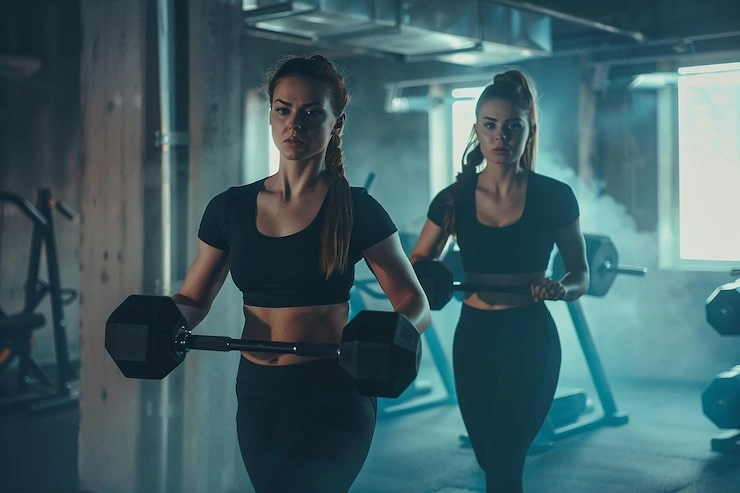
Let me tell you something straight. If you are a woman over forty, strength training is not optional anymore. It is not about fitting into smaller jeans. It is not about looking like a fitness model. It is about staying strong enough to live your life the way you want to.
I have seen too many women hit their forties and think they need to slow down. They think lighter weights, more cardio, and just staying busy is enough. That is not true. That is actually the opposite of what your body needs right now.
Here is what happens after forty. Your muscle starts to leave. It is called sarcopenia, and it starts in your late thirties and speeds up in your forties . Your bones get thinner. Your metabolism slows down. Your joints feel stiffer. Your grip gets weaker, which matters more than you think because grip strength is linked to how long you stay independent .
These changes are normal. They are biological. They are not your fault. But they are also not inevitable. Strength training is one of the few things that actually pushes back against all of them .
This article is going to walk you through exactly what you need to do. Not what the fitness industry wants to sell you. Not complicated routines with fancy equipment. Just the real stuff that strength training workout for women over 40.
Why Strength Training Changes Everything After Forty?
Let us start with the big picture. Why should you bother lifting weights when you could just walk or do yoga?
The answer is that walking and yoga are great. They really are. But they do not give you what strength training gives you. Cardio keeps your heart healthy. Strength training keeps the rest of you working properly .
Here are the things that strength training actually does for women over forty:
It builds bone density. After menopause, your bones lose density faster. That puts you at risk for fractures. Weight-bearing exercises tell your bones to stay strong . This is not something you can get from a pill. You have to load your skeleton.
It protects your joints. Strong muscles support your joints. When your muscles are weak, your joints take more of the load. That is when knees start hurting and backs start aching .
It keeps your metabolism working. Muscle burns more calories than fat, even when you are sitting still. When you lose muscle, your metabolism drops. Building muscle back keeps it up .
It gives you better balance. Falls are dangerous as you get older. Strength training improves your coordination and stability .
It changes how you feel. Women who lift weights report feeling more confident. They feel more in control of their bodies. They are proud of what they can do .
Let me be really direct about one thing. You are not going to get bulky. That is a myth that keeps so many women away from weights. Most women do not have the hormones to build big muscles . What you will get is firmness. Shape. Strength. You will look like a stronger version of yourself.
Read Also: Core Workout Without Crunches
What Changes in Your Body at Forty?
You need to understand what is going on inside before you can fix it from the outside.
Muscle Loss
Your body starts losing muscle mass around age thirty-five. By the time you are in your forties, it is happening faster. Without resistance training, you lose about three to five percent of your muscle every decade .
This matters for everything. Your balance. Your strength. Your metabolism. How easily you get tired.
Bone Density
Your bones are living tissue. They break down and rebuild constantly. After menopause, the rebuilding slows down. Your bones can become thinner and more fragile .
This is why weight-bearing exercise matters so much. It signals your bones to keep rebuilding.
Hormonal Changes
Perimenopause and menopause change your hormone balance. Estrogen drops. That affects your bones, your muscle, your fat storage, and even your mood .
Strength training does not fix your hormones. But it helps your body adapt to the changes. It makes you more resilient.
Grip Strength
This one surprises people. Grip strength is actually a good indicator of your overall health and independence. When your grip weakens, you start struggling with everyday things. Opening jars. Carrying groceries. Holding onto railings .
Heavy lifting trains your grip naturally. When you hold onto weights, your hands and forearms get stronger. That strength carries over into everything else.
The Myths That Hold Women Back
Before we get into the actual workout, we have to clear some things up. These myths keep smart women from doing what their bodies need.
"Lifting weights makes you bulky"
No. I already said this, but I will say it again. It is not going to happen. Building bulky muscle requires specific training, specific nutrition, and genetics that most women do not have. What you will get is toned arms, stronger legs, and a body that works better .
"Cardio is enough"
Cardio is good for your heart. That is important. But it does not build muscle. It does not protect your bones. You need both. Cardio and strength training are not the same thing .
"I am too old to start"
You are not. Studies show that women in their forties, fifties, and beyond can build muscle and get stronger . The best time to start was ten years ago. The second best time is today.
"I need to join a gym"
You do not. You can start at home with dumbbells. You can use resistance bands. You can do bodyweight exercises. A gym is helpful but not required.
"I need to lift heavy right away"
No. You need to learn good form first. Start light. Master the movement. Then add weight slowly .
How to Start Strength Training Safely?
If you are new to lifting, or if you have not lifted in years, you need to start smart.
Talk to Your Doctor
This is not optional. Get clearance before you start any new exercise program. If you have any injuries or conditions, talk about what is safe for you .
Focus on Form First
Your form matters more than the amount of weight you lift. Bad form with light weights will hurt you. Good form with heavier weights will make you stronger .
Start with light weights and practice the movement. Watch yourself in a mirror. Record yourself on your phone. Have someone check your form.
Start with Bodyweight Exercises
Squats and lunges with just your body weight are great places to start. They strengthen your muscles and teach you good movement patterns .
Breathe Properly
Exhale when you push or lift. Inhale when you release or lower. Holding your breath increases your blood pressure and is not safe .
Listen to Your Body
There is a difference between muscle fatigue and pain. Fatigue is the burn you feel at the end of a set. Pain is sharp, sudden, or joint-based. If you feel pain, stop .
Read: Best Beginner Workout Plan For Women At Home
The Warm-Up You Should Not Skip
Do not skip your warm-up. I know it is tempting to just get started. But your joints and muscles need preparation, especially after forty.
Five to Ten Minutes of Light Cardio
Get your blood moving. March in place. Do jumping jacks. Jog lightly. You should feel warmer and your heart rate should be up .
Dynamic Stretches
These are not the same as static stretches. You are moving while you stretch.
-
Arm circles. Big and small.
-
Leg swings. Front to back and side to side.
-
Hip circles. Like you are hula hooping.
-
Cat-cow stretches. On your hands and knees, round your back and then arch it.
One or Two Warm-Up Sets
Before you lift your working weight, do one set with a very light weight. This wakes up your muscles and prepares your nervous system.
The Core Exercises You Need
This is the heart of your program. These exercises work multiple muscle groups at once. They are efficient. They are effective. They mimic real-life movements.
Squats
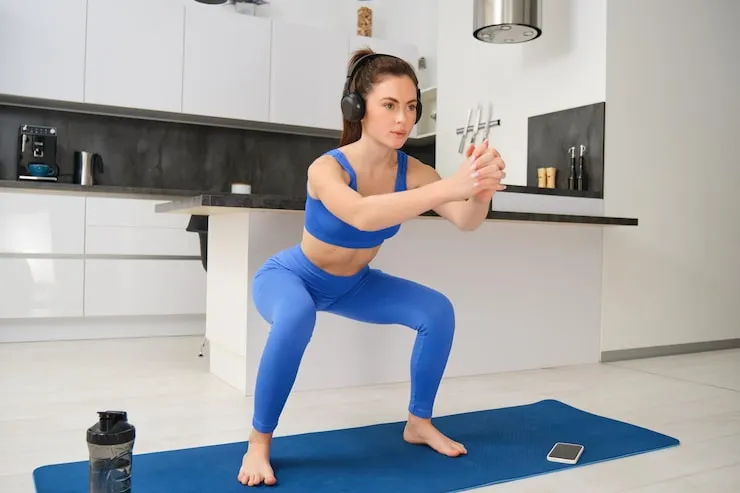
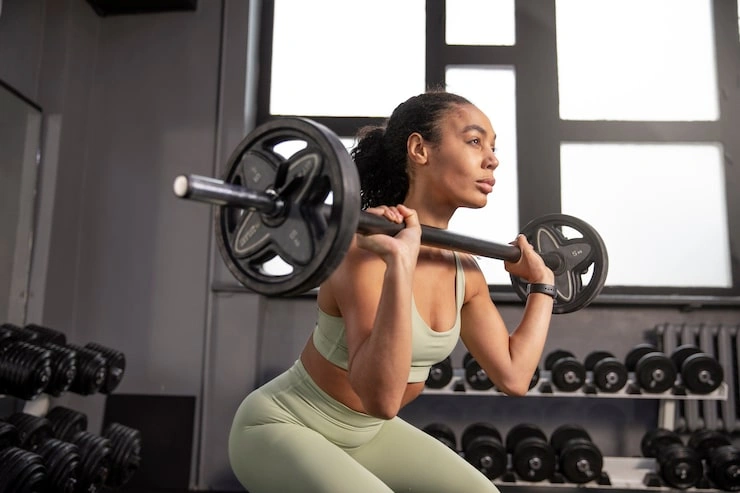
This is the most important exercise you can do. Squats work your legs, your glutes, your core, and your back all at once.
How to do it:
Stand with your feet shoulder-width apart. Push your hips back like you are sitting in a chair. Keep your chest up and your back straight. Lower yourself until your thighs are at least parallel to the floor. Push through your heels to stand back up .
Bodyweight version: Start with no weight. Get the movement right.
Weighted version: Hold a dumbbell or kettlebell against your chest. Or rest a barbell across your shoulders.
Why it matters: Squats build leg strength for climbing stairs, getting up from chairs, and carrying things.
Deadlifts (or Romanian Deadlifts)
Deadlifts strengthen your entire back side. Your hamstrings, glutes, and lower back.
How to do it:
Stand with your feet hip-width apart. Hold a pair of dumbbells in front of you, close to your thighs. Keep your back flat and your core engaged. Hinge at your hips, pushing your butt backward. Lower the weights along your legs until you feel a stretch in your hamstrings. Squeeze your glutes to stand back up .
Important: Keep your back straight. Do not round it.
Why it matters: Deadlifts teach you how to pick things up safely. That protects your back in daily life.
Hip Thrusts
This exercise directly targets your glutes. Strong glutes protect your lower back and your knees.
How to do it:
Sit on the floor with your shoulder blades resting against a bench or step. Place a dumbbell or barbell across your hips. Keep your chin tucked. Push through your heels to lift your hips off the floor. Squeeze your glutes at the top. Lower back down slowly .
Bodyweight version: Do it without weight until you get the strength training workout for women over 40.
Why it matters: Strong glutes improve your posture and your power. They help with everything from walking to running to lifting.
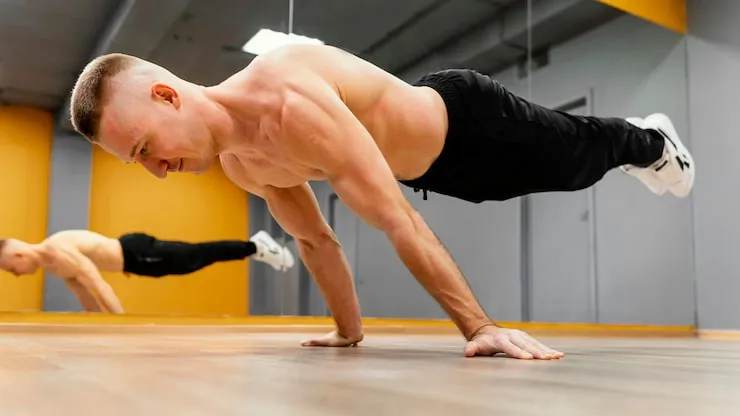
Push-Ups
Push-ups build upper body strength. They work your chest, shoulders, triceps, and core.
How to do it:
Start on your hands and knees. Place your hands slightly wider than shoulder-width. Walk your feet back until your body is straight. Lower your chest toward the floor. Push back up.
Modification: Do push-ups on your knees. Or do them against a wall. Or against a bench. Work your way up to full push-ups .
Why it matters: Upper body strength helps with carrying, pushing, and catching yourself if you fall.
Rows
Rows strengthen your back and your shoulders. They balance out all the pushing you do with push-ups.
How to do it:
Bend forward at your hips. Keep your back flat. Let your arms hang down holding dumbbells. Pull the weights toward your ribs. Squeeze your shoulder blades together. Lower the weights slowly .
Why it matters: Rows improve your posture. They prevent the rounded shoulders that come from too much sitting.
Overhead Press
This strengthens your shoulders and arms.
How to do it:
Stand with your feet shoulder-width apart. Hold dumbbells at your shoulders, palms facing forward. Press the weights straight up. Lower them back down slowly .
Why it matters: Overhead pressing helps with lifting things onto shelves. It also keeps your shoulders healthy.
The Weekly Schedule
You do not need to train every day. You need consistency. Two to three days a week is enough .
Option One: Full Body Twice a Week
-
Day 1: Full workout
-
Day 2: Rest
-
Day 3: Full workout
-
Day 4: Rest
-
Day 5: Rest or active recovery
-
Day 6: Rest
-
Day 7: Rest
Active recovery means walking, stretching, or light yoga. Not a full workout.
Option Two: Full Body Three Times a Week
-
Day 1: Full workout
-
Day 2: Rest
-
Day 3: Full workout
-
Day 4: Rest
-
Day 5: Full workout
-
Day 6: Rest
-
Day 7: Rest
This is better if you have the time and energy. It gives you more practice and more strength gains.
What to Do Each Workout
Each workout should include:
-
Warm-up (five to ten minutes)
-
Squats (three sets of eight to twelve reps)
-
Hip thrusts (three sets of eight to twelve reps)
-
Deadlifts (three sets of eight to twelve reps)
-
Push-ups (three sets of as many as you can do with good form)
-
Rows (three sets of eight to twelve reps)
-
Overhead press (three sets of eight to twelve reps)
-
Cool-down and stretching
This is not a complicated program. It does not need to be.
Rest Between Sets
Take sixty to ninety seconds between sets. This gives your muscles enough time to recover so you can do the next set with good form .
How Heavy Should You Go
This is a common question. The answer is not a specific number of pounds. It is about effort.
Choose a weight that makes the last few reps of each set feel challenging. You should be able to finish the set with good form, but you should feel like you could not do many more .
When that weight starts feeling easy, add more weight. This is called progressive overload. It is how you get stronger .
How to Make Progress?
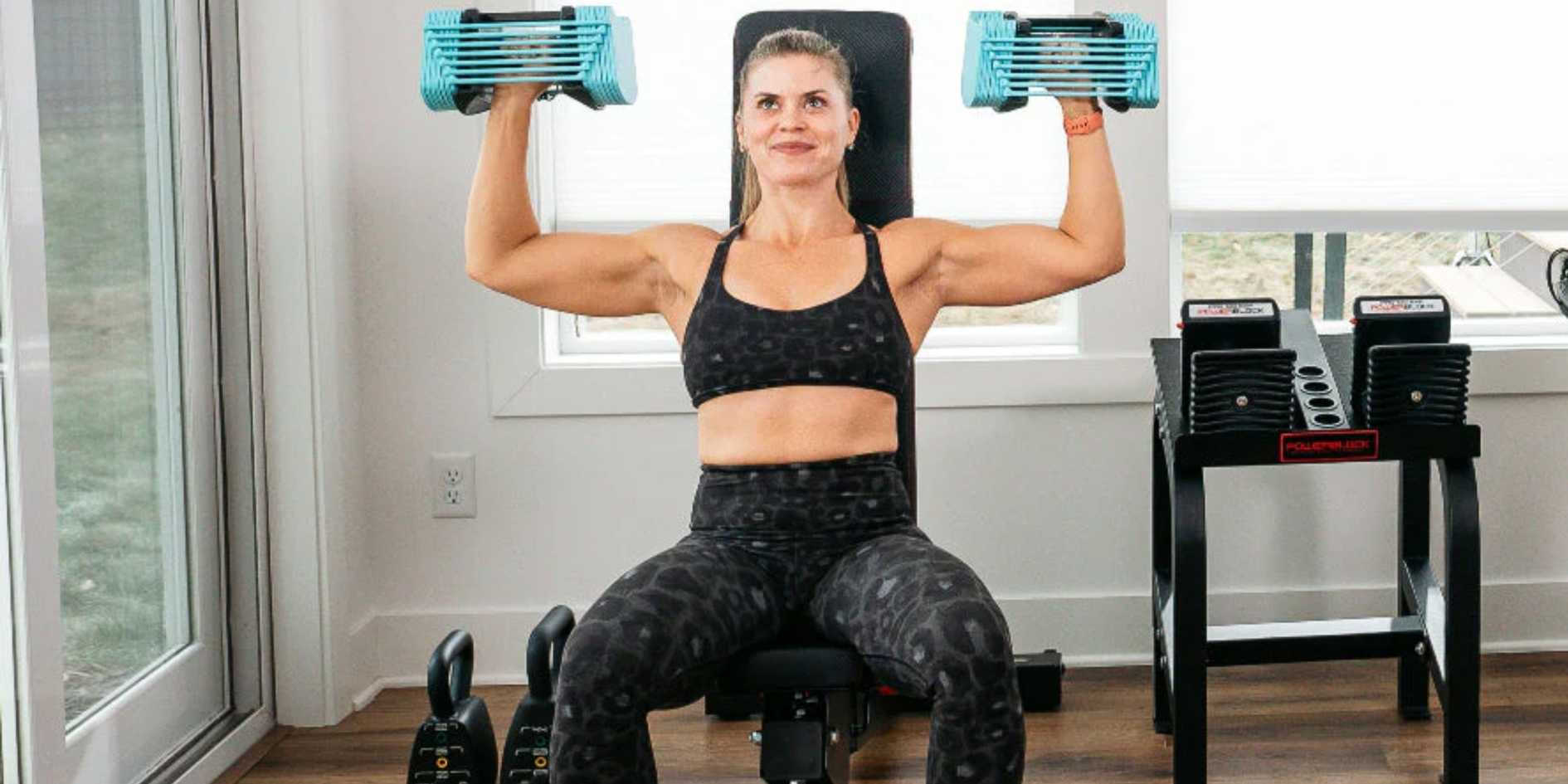
Getting stronger is not complicated. But it requires a plan.
Progressive Overload
This is the principle behind all strength training. You need to challenge your muscles a little more over time.
You can challenge yourself in a few ways:
-
Increase the weight
-
Do more reps
-
Do more sets
-
Rest less between sets
Pick one and do it consistently. For example, if you are doing three sets of ten squats with twenty pounds, try three sets of twelve. Or try twenty-five pounds for three sets of ten.
Do not try to do everything at once. One small change per week is enough.
Track Your Workouts
Write down what you do. The exercise. The weight. The reps. The sets.
This gives you a record of your progress. You can see yourself getting stronger. That is motivating. It also helps you know when to increase the weight.
Be Consistent, Not Perfect
Miss a workout? It happens. Do not skip the next one because you missed the last one. Just get back to it.
Two good workouts a week is better than zero. Three is better than two. Consistency beats intensity every time.
Give It Time
Strength takes time to build. You will not see dramatic changes in the first week. You will probably not even see them in the first month.
But they are happening. Your muscles are adapting. Your bones are getting stronger. Your nervous system is learning. Stick with it.
You May Also Like: Daily Home Workout Schedule
Nutrition for Strength
You cannot out-train a bad diet. Your muscles need fuel to grow and recover.
Protein
Protein is essential for building muscle. You need to eat enough of it, especially as you get older.
How much? A good goal is to include protein at every meal. That is about twenty to thirty grams per meal .
Good sources include:
-
Chicken and turkey
-
Fish
-
Eggs
-
Greek yogurt
-
Beans and lentils
-
Tofu
Not Too Much, Not Too Little
You do not need to be in a huge calorie deficit. Your body needs fuel to build muscle. Extreme dieting actually works against you because it makes your body break down muscle for energy .
If you want to lose fat, aim for a modest deficit. Small changes that you can maintain for a long time.
Hydration
Drink water. Your muscles are mostly water. Dehydration hurts your performance and your recovery.
Common Mistakes to Avoid
Doing Too Much Too Soon
This is the number one mistake I see. People get excited. They try to lift heavy weights right away. They get injured. Then they quit.
Start light. Focus on form. Add weight slowly. This is not a race.
Skipping Rest Days
Your muscles do not grow while you are lifting. They grow while you are resting. If you train the same muscles every day, you are not giving them time to repair .
Do not train the same muscle groups two days in a row. Your rest days are when the magic happens.
Ignoring Warm-Ups
You might think you can skip the warm-up to save time. You are wrong. A good warm-up prevents injuries. It makes your workout better. It is not optional.
Comparing Yourself to Others
The woman next to you in the gym might be lifting heavier. That does not matter. She might have been lifting for years. She might have different genetics. Stay focused on your own progress.
Lifting with Bad Form
It is better to do five reps with perfect form than ten with sloppy form. Bad form does not build strength. It builds injuries .
FAQs
How often should women over forty lift weights?
Two to three times a week is enough. You should not train the same muscles two days in a row. Give yourself rest days to recover .
How heavy should the weights be?
Choose a weight that makes the last few reps challenging but allows you to finish with good form. It is different for everyone. Start lighter than you think and add weight slowly .
Will lifting weights make me bulky?
No. Most women do not have the hormones to build bulky muscle. You will build strength, tone, and shape. Not bulk .
What if I have bad knees or a bad back?
Talk to your doctor first. You may need to modify some exercises or avoid certain movements. There are always variations and alternatives. Do not push through pain .
Can I do this at home?
Yes. You need dumbbells or resistance bands. Bodyweight exercises work too. You do not need a gym membership .
Do I need to do cardio too?
Cardio is good for your heart. Strength training is for your muscles and bones. You should do both. Just do them on different days or at different times .
How long will it take to see results?
You will feel stronger in a few weeks. Visible changes take longer. Maybe two or three months. Stick with it. The benefits are worth it .
What is the best workout for women over forty?
The best workout is the one you will actually do. Consistency matters more than perfection. Stick to the basics. Squats, deadlifts, rows, push-ups, and presses. Do them well. Do them regularly.
Does strength training help with menopause symptoms?
It can help with many symptoms. It improves mood and confidence. It protects your bones. It helps with weight management. It does not replace medical treatment, but it is a powerful tool .
Can I start strength training if I have never done it before?
Yes. Start with bodyweight exercises. Practice good form. Use light weights. Gradually increase the challenge. Many women start lifting in their forties, fifties, and beyond .
The Bottom Line
Strength training is not optional for women over forty. It is the single most important thing you can do for your long-term health.
You do not need fancy equipment. You do not need complicated routines. You need consistency and effort.
Start with the basics. Squats. Deadlifts. Hip thrusts. Push-ups. Rows. Overhead presses. Two or three times a week. Work hard. Rest properly.
Your bones will get stronger. Your muscles will get firmer. Your joints will feel better. Your metabolism will work better. You will feel stronger and more capable.