Core Workout Without Crunches

Look, I used to do crunches all the time. Every workout ended with me on the floor, hands behind my head, counting reps until my neck ached. I thought that burning feeling meant I was getting somewhere. My lower back would feel tight afterward, but I figured that was just part of working out.
Then one day I mentioned it to a trainer at the gym I went to. He watched me do a set and just shook his head. He said my neck was taking most of the strain and my back was rounding in a way that wasn't doing me any favors. He told me to stop doing crunches completely. I thought he was crazy at first. How do you train abs without crunches? That's all I knew.
He was right though. Once I switched to the stuff he showed me, my back pain went away and my core actually got stronger. Not the kind of strong that looks good in a mirror, although that happened too. The kind of strong where you can carry heavy grocery bags up three flights of stairs and core workout without crunches.
So What's Actually Wrong With Crunches?
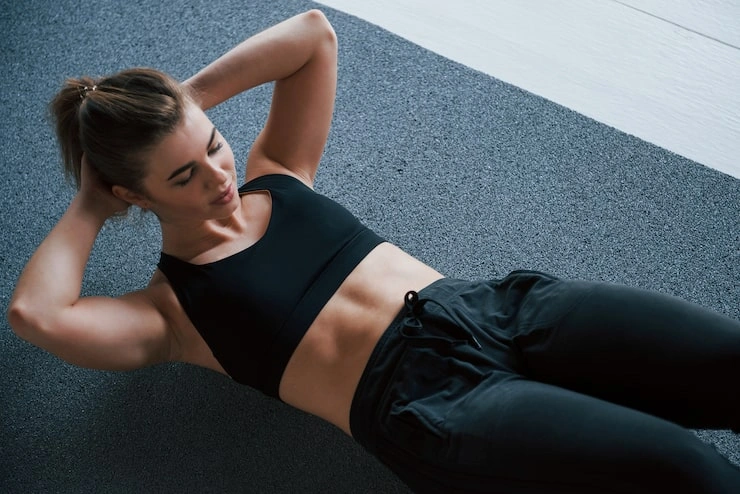
Not trying to say crunches are evil or anything. They work for some folks. But here's what happens to a lot of people.
The neck thing is real. Most of us pull on our head when we crunch. Your hands are behind your head and without even thinking about it you're yanking your neck forward with every rep. After a set your neck feels strained and sore. That's not your abs being weak. That's you putting pressure on your cervical spine.
Then there's the lower back stuff. When you do a crunch you're rounding your lower back into the floor. If you sit at a desk for work, your back is already in that rounded position for hours every day. Then you go to the gym and round it some more. At some point your back is going to complain. I learned this the hard way.
There's also this thing that a spine researcher named Stuart McGill talks about. He's studied spines for decades and he says repeatedly bending the lower back under load can stress your discs over time. Not saying one set of crunches will ruin you. But doing them day after day for years might not be the smartest plan when there are safer options that work better.
Read Also: Chair Workouts For Seniors Over 70
What Your Core Actually Does?
Here's something I didn't understand for a long time. The abs aren't really designed to curl you up off the floor. That's not their main job in real life.
Think about it. When do you ever need to lie on your back and curl up? Almost never. But you know what you do need all the time? The ability to keep your spine steady while your arms and legs do things. Walking. Carrying stuff. Picking things up. Twisting to grab something from the back seat of the car. In all those moments your core is working to stop your spine from flopping around.
Your core is actually a big cylinder of muscle around your midsection. The front part is what you see in the mirror. But there's also the sides, the deep back muscles, the pelvic floor, and the breathing muscle up top. They all work as one unit. Their job is stability. Stopping unwanted movement. Keeping you upright when something tries to knock you off balance.
So when you only train crunches, you're ignoring almost everything your core is supposed to do. No wonder people do hundreds of crunches and still have back pain.
The Three Things Your Core Training Should Focus On
Instead of moving the spine, think about resisting movement. That's the big shift. A strong core holds still while life pushes and pulls on it.
There are three ways life tries to move your spine without your permission.
First is when your lower back wants to arch too much. Like when you're doing a push-up and your hips sag toward the ground. That's extension. You need to train your body to stop that.
Second is when something tries to twist you. Imagine someone pushes your shoulder from the side. Your body wants to rotate. Stopping that rotation takes core strength.
Third is when you carry something heavy on one side and your body wants to lean the other way. Your side muscles have to fire hard to keep you straight.
If you pick exercises that train these three things, you're covering everything. No crunches needed.
The Actual Exercises That Work
These are the ones I do now. They've made a real difference for me. I'll explain them the way they were explained to me, with the cues that helped things click.
Dead Bug
This sounds silly but it's probably the most important one on the list. You lie on your back and bring your knees up so they're above your hips. Arms straight up. Then you press your lower back into the floor. Like you're trying to squish a piece of paper under there.
From that position you slowly reach one arm overhead and straighten the opposite leg out. The key thing, the thing that makes it work, is that your lower back cannot come off the floor. Even a little bit. If it does, you went too far. Bring the arm and leg back and try again but smaller.
What this teaches your body is how to keep the spine stable when the limbs are moving. That's literally what your core is supposed to do. Start with six slow reps per side. Like painfully slow. Two seconds out, two seconds back.
Plank
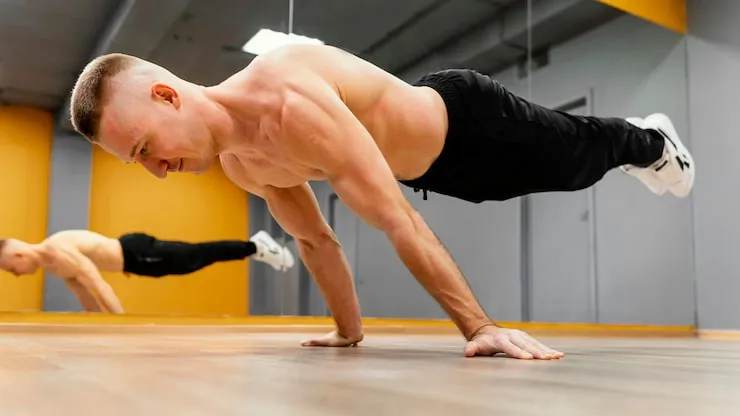
Everyone knows planks but most people do them wrong. I did them wrong for years. The mistake is letting your hips sag down or stick way up in the air.
The right way feels like your whole body is one straight board. Elbows under your shoulders. Squeeze your thighs like you're holding something between them. Pull your belly button in. And here's the cue that helped me, think about pulling your elbows toward your toes without actually moving. That creates full body tension.
Don't try to hold it for five minutes. That's pointless and your form falls apart. Twenty seconds of perfect plank beats two minutes of a saggy one. Build up slowly.
Side Plank
Same idea but on your side. Stack your feet. Elbow under your shoulder. Lift your hip until your body is straight. The hip wants to drop. Don't let it.
If that's too hard, drop your bottom knee to the ground. Keep the hip up though. That's the part that matters. Do both sides the same amount of time. One side will probably feel way harder. That's normal.
Pallof Press
This one I do with a band. You need something anchored at chest height off to your side. A cable machine works or just tie a band to a pole.
Stand sideways to the anchor. Hold the band at your chest. Step away until you feel it pulling you toward the anchor. Your body will want to twist. Don't let it. That's the whole exercise right there. Then press your hands straight out in front of you. The farther out you press, the harder your core has to fight to stay square. Hold for a second, bring hands back in. Do all your reps facing one way then switch.
Your hips shouldn't move at all during this. Only your arms.
Suitcase Carry
Grab one heavy dumbbell. Hold it at your side like a suitcase. Stand tall. Pull your shoulder back so you're not shrugging. Walk.
Your body will want to lean away from the weight. That's your side muscles slacking off. Don't lean. Keep your spine straight up and down. Walk slowly with control. Go about forty steps then switch hands.
This one is almost too simple but it works. It trains exactly what happens in real life when you carry something uneven.
Hollow Body Hold
This is from gymnastics. You lie on your back, press the lower back down, then lift your legs and shoulders off the floor a few inches. Arms reach toward your feet. You're making a shallow bowl shape.
The lower back has to stay pressed down the whole time. If it comes up, you lowered your legs too far. Bring them higher until you can keep that back flat. This is harder than it sounds. Start with fifteen seconds and add core workout without crunches.
Body Saw
Get in a forearm plank. Put your feet on something that slides like a towel on hardwood or those furniture slider things. Then push your feet back so your body moves away from your arms. Only go as far as you can without your back sagging. Then pull yourself back. Slow and controlled.
This one hits different. The movement makes the plank much harder because you're fighting to keep your spine from caving the whole time.
One Arm Overhead Carry
Take a light dumbbell and press it overhead with one arm. Lock it. Hold it right over your shoulder. Then carry something heavier in the other hand at your side. Walk.
Your core has to work like crazy to keep you from tipping. Start lighter than you think. Form first.
You May Also Like: Workout Routine To Reduce Belly Fat At Home
How I Put These Together?
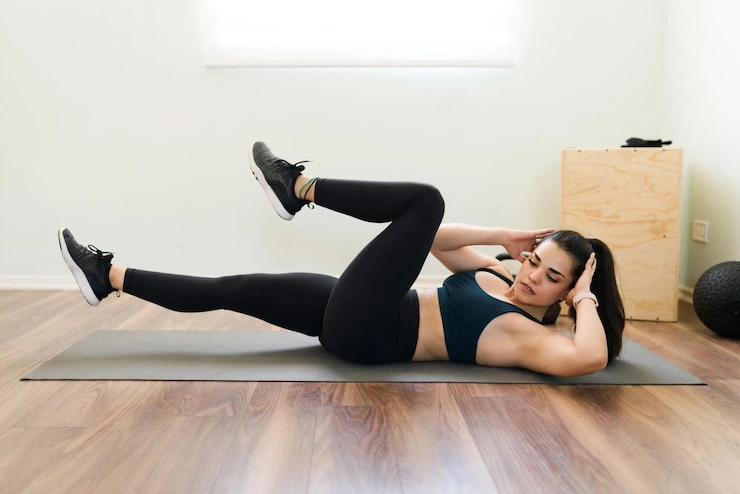
Here's a simple routine I do twice a week. Takes about fifteen minutes.
First I warm up by just moving around for a couple minutes. Marching, arm circles, whatever gets me warm.
Then I do a circuit of three things.
Dead bug, six slow reps each side. Side plank, twenty seconds each side. Regular plank, thirty seconds. I do that whole circuit two or three times with a minute rest between rounds.
After that I do the standing work. Pallof press, ten reps each side. Then suitcase carry, about forty steps each side. Three rounds of that.
Then I finish with something hard like the hollow body hold or the body saw. Three sets of whatever I can manage with good form.
That's it. Fifteen minutes and my whole core feels worked in a way crunches never did.
Stuff People Get Wrong
Few things to watch out for.
Holding your breath. I do this without realizing it. You brace your core and just stop breathing. Then you get lightheaded. Breathe slow and steady through the whole movement.
Sagging hips in plank. When you feel your back start to dip, that's the end of the set. Doesn't matter if the timer still has time on it. Bad form doesn't count.
Going too fast. These aren't cardio exercises. Slow down. Feel every second of the movement. That's where the strength comes from.
Not pressing the back down in dead bug. If your lower back lifts, you're doing a different exercise that's not helping you. Adjust until you can keep it flat.
What Changed For Me?
After about three weeks of this stuff my back stopped hurting. Not like a miracle but noticeably better. Sitting at my desk all day used to leave me stiff and sore by five o'clock. That mostly went away.
I also noticed I could carry things easier. A bag of dog food, a laundry basket, whatever. My body just felt more solid. Like things were connected better.
The visual stuff came later. Once I cleaned up my eating a bit, my midsection actually looked better than it did when I was doing hundreds of crunches. The muscles were thicker and more visible. But honestly the feeling was the real win.
Conclusion
You don't have to overhaul your whole workout. Pick three of these exercises and do them instead of crunches for two weeks. See how your back feels. See how your body feels when you're just walking around. The dead bug, plank, and suitcase carry are a good place to start. Do them with focus. Pay attention to what your spine is doing. Breathe. I haven't done a crunch in years and I don't miss them at all. My core is stronger, my back feels better, and I'm not spending half my workout pulling on my neck. That's a win all around.