Dumbbell Exercises For Women Over 50
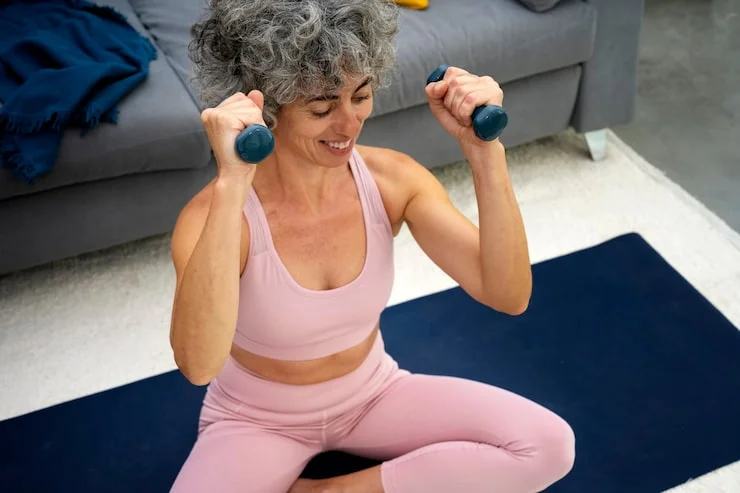
Lifting weights after 50 is not about getting bulky. It is about keeping your body working. Your muscles shrink with age. Your bones get thinner after menopause. Both problems get worse if you do nothing. Both problems get better when you pick up a dumbbell. I have trained women in their 50s, 60s, and 70s. The ones who stick with it walk better, stand taller, and complain less about their backs. The ones who quit usually quit because they started too heavy or too fast. Do not do that.
This guide gives you eight exercises. You can do them at home with a pair of dumbbells. No gym needed.
Before Your First Workout
Three things to sort out first.
See your doctor if you have bone loss. If you have osteoporosis or have broken a bone from a minor fall, get cleared before you start. Some movements need adjusting for you. A doctor or physical therapist can tell you which ones.
Buy the right weight. Most women start too heavy. Buy a set of 5-pound and 8-pound dumbbells. If 5 feels easy after two weeks, move up. If 8 feels hard on the last two reps, stay there. That is normal.
Learn the moves with no weight first. Do each exercise with just your body weight. Get the motion right. Then add dumbbells. This sounds slow. It saves you from injury.
The Workout
Do this routine two or three times a week. Pick days that are not back to back. Monday, Wednesday, Friday works well. For each exercise, do 10 to 12 reps. Rest 60 to 90 seconds. Do two or three rounds.
Read Also: What Exercise Burns The Most Belly Fat For Female
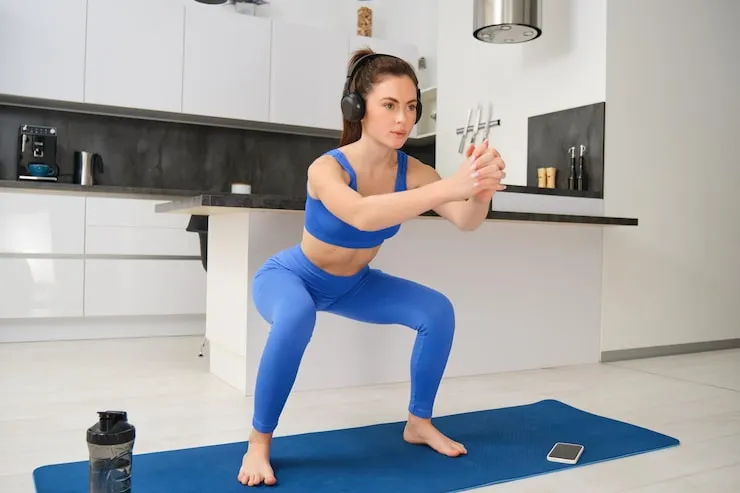
1. Goblet Squat
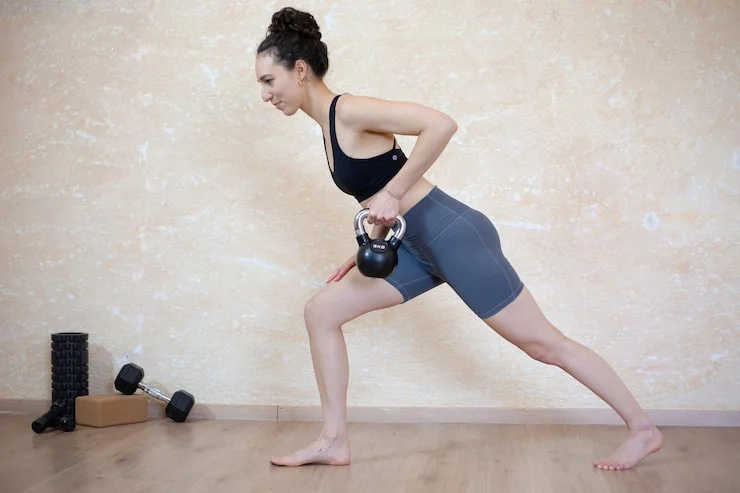
- This works your thighs, your butt, and your middle. It also teaches you how to squat without falling over.
- Hold one dumbbell straight up against your chest. Both hands on the top end. Elbows tucked in.
- Feet a bit wider than your shoulders. Toes turned out slightly.
- Push your hips back like you are sitting in a chair. Bend your knees. Go down as far as you can without your heels lifting. Stop when your thighs are about level with the floor.
- Push through your heels to stand up.
- If you feel wobbly, put a chair behind you. Touch your butt to the seat each time. That gives you a target and keeps you safe.
2. Romanian Deadlift
This one hits the back of your legs and your butt. It also teaches you how to bend over without hurting your back. That matters every time you pick something up off the floor.
- Stand with feet hip-width apart. A dumbbell in each hand. Let them hang in front of your thighs.
- Pull your shoulders back. Keep your back flat. Put a small bend in your knees.
- Now push your butt back behind you. Let the dumbbells slide down the front of your legs. Your chest will lean forward. That is fine. Keep going until you feel a stretch in the back of your thighs.
- Squeeze your butt and push your hips forward to stand up.
- One rule: do not let your back round. If it rounds, you went too low. Stop sooner next time.
3. Bent-Over Row
This works your upper back. A lot of women over 50 get rounded shoulders. This exercise helps pull them back where they belong. Feet hip-width apart. Bend forward at the hips until your chest is angled toward the floor. Knees slightly bent. Back flat. Let the dumbbells hang down.
Pull the weights up toward your waist. Drive your elbows back. Squeeze your shoulder blades together like you are holding a pencil between them. Hold for a second. Then lower the weights slowly. Do not rock your body to get the weight up. If you have to swing, the weight is too heavy.
4. Overhead Press
This builds your shoulders. It also helps with anything you do above your head, like putting away dishes or reaching for something on a high shelf.
Stand with feet hip-width apart. Hold a dumbbell in each hand at shoulder height. Palms facing forward.
Tighten your belly. Keep your wrists stacked right over your elbows.
Push the weights straight up until your arms are straight. Do not lean back. Lower them back to your shoulders with control.
If your shoulders hurt doing this, try it sitting down with your back against a chair. Or use a lighter weight. Shoulder pain is common after 50. Work around it, do not push through it.
5. Biceps Curl
- This is the one everyone knows. It works the front of your arms.
- Stand with a dumbbell in each hand. Arms straight at your sides. Palms facing forward.
- Bend your elbows and bring the weights up toward your shoulders. Keep your upper arms still. Only your forearms move. Lower them back down slowly.
- No swinging. No leaning back. If you have to cheat to get the weight up, go lighter.
6. Triceps Kickback
- This works the back of your arms. That is the spot a lot of women want to firm up.
- Hold a dumbbell in each hand. Bend forward at the hips until your chest is angled down. Knees slightly bent. Back flat.
- Tuck your upper arms against your sides. Bend your elbows so your forearms point down.
- Now straighten your arms behind you. Squeeze the back of your arms at the top. Bend your elbows to come back.
- Keep your upper arms glued to your sides the whole time. If they drift, you are doing it wrong.
7. Reverse Lunge
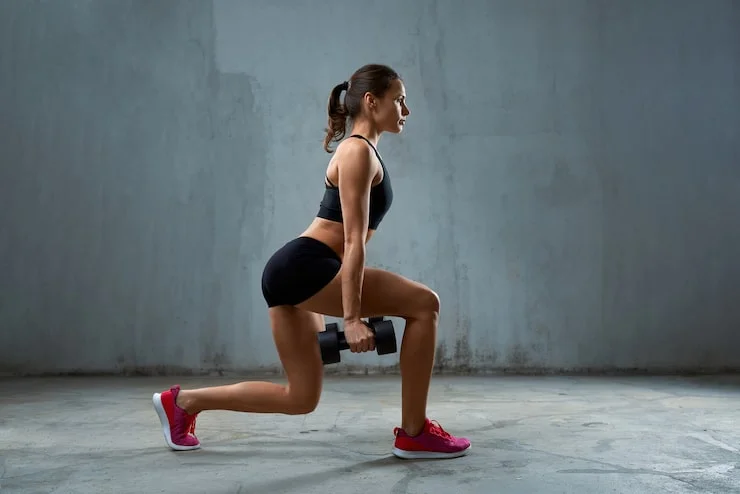
- This works your legs and your balance. It copies the motion you use walking and climbing stairs.
- Stand tall. A dumbbell in each hand at your sides. Or hold one dumbbell at your chest. Whatever feels better.
- Step your right foot back. Land on the ball of that foot. Lower your back knee toward the floor. Stop before it touches, or let it tap gently. Your front leg should make a 90-degree angle.
- Push through your front heel to stand up. Do the other side.
- If balance is a problem, hold a chair with one hand. There is no shame in that. Balance gets better with practice.
8. Chest Press
This works your chest, shoulders, and the back of your arms. Lie on your back. Knees bent. Feet flat on the floor. A dumbbell in each hand. Arms straight up over your shoulders. Palms facing your feet.
Pull your shoulder blades together against the floor. Bend your elbows and lower the weights until your upper arms rest on the floor. Elbows at 90 degrees. Push back up. You can do this on the floor or on a bench. The floor version is safer if you do not have a spotter.
How to Get Stronger Over Time?
The first two weeks will feel awkward. That is normal. Your body is learning dumbbell exercises for women over 50.
After two or three weeks, the moves will feel easier. That is when you add weight. Add one or two pounds. Or add one or two reps. Do not add both at once.
This is called progressive overload. It sounds fancy. It just means you ask a little more of your muscles over time. That is the whole secret to getting stronger. There is no other secret.
If you stop adding weight or reps, you stop getting stronger. Your body adapts to what you ask of it. Ask for nothing, get nothing.
You May Also Like: 30 Day Home Workout Challenge For Beginners
Rules That Keep You Safe
Sharp pain means stop. Dull soreness the next day is fine. Sharp pain during a movement is not. Stop and figure out what went wrong.
Do not train the same muscles two days in a row. Muscles rebuild while you rest. Skip the rest and you skip the results.
Eat enough protein. Most women over 50 do not eat enough. Aim for a palm-sized portion of protein at each meal. Eggs, chicken, fish, beans, Greek yogurt. Your muscles need it to rebuild.
Drink water. Muscle is mostly water. Dehydration makes everything harder.
Sleep. This is when your body actually repairs itself. Seven to eight hours if you can get it.
A Sample Week
Here is what a simple schedule looks like.
Monday: Full workout. All eight exercises. Two rounds each.
Tuesday: Walk or rest.
Wednesday: Full workout. All eight exercises. Two rounds each.
Thursday: Walk or rest.
Friday: Full workout. All eight exercises. Two rounds each.
Saturday and Sunday: Rest or light activity. A walk, some gardening, a bike ride.
If three days a week feels like too much at first, do two. Two days a week still works. Two is far better than zero.
What to Expect?
- Week one: You will feel clumsy. The weights will feel odd. You might be sore for a few days.
- Week four: The moves feel more natural. You can probably add a little weight.
- Week eight: You notice daily tasks getting easier. Stairs. Grocery bags. Getting off the floor.
- Month six: People notice. You stand taller. You move better. You have more energy.
- This is not hype. This is what happens when you lift weights two or three times a week for six months. It works at 50. It works at 60. It works at 70 and dumbbell exercises for women over 50.
Conclusion
You do not need a fancy program. You do not need a gym. You do not need to spend an hour working out. You need two dumbbells, two or three days a week, and the patience to start light and build slow.
The women who get strong are not the ones who do the most. They are the ones who keep showing up. Start this week. Add a little weight next month. Keep going. That is the whole plan. It has worked for every woman I have trained who stuck with it. It will work for you.