Strength Training Exercises For Beginners At Home
You can start strength training at home today with no equipment. The best beginner exercises are squats, push-ups, planks, lunges, glute bridges, and rows. Do them two to three days per week, focusing on proper form before adding difficulty. Start with two sets of 8 to 12 repetitions for each movement.
Why Strength Training At Home Works?
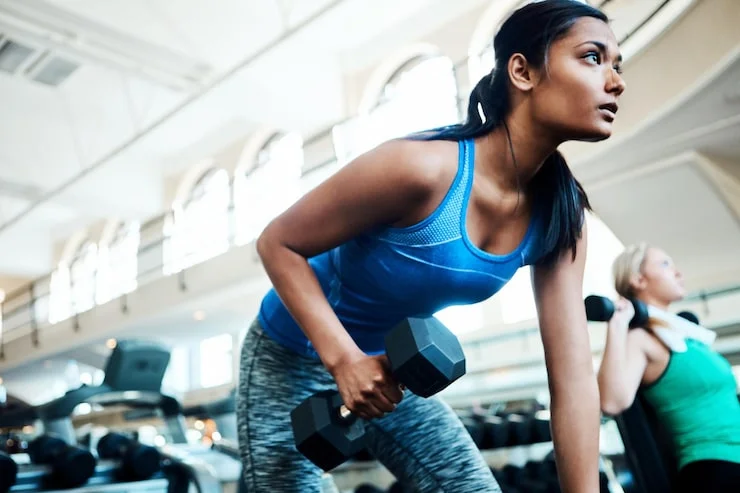
Strength training at home works because your body provides all the resistance you need. Your muscles do not know if the resistance comes from a metal plate or from your own body weight. If you challenge the muscle close to fatigue, it will grow.
This approach is called bodyweight training or calisthenics. It builds real strength that carries over into daily life. Pushing a lawn mower, lifting a laundry basket, climbing stairs, getting off the floor without help — these are the movements you train when you do bodyweight exercises.
You do not need a gym membership. You do not need expensive equipment. You do not need much space. A small area in your living room works fine.
Read Also: Pre-workout Snacks For Fitness
The Real Benefits You Get
The benefits go beyond just looking stronger. Research shows that bodyweight training improves posture, strength, and body composition without major equipment. A 2017 study found participants measurably improved these areas after just eight weeks of calisthenics training.
Here is what you gain:
Better daily movement. You train movements, not just muscles. Squatting, pushing, pulling, and bending become easier. This matters as you age.
Joint health and coordination. Your smaller stabilizer muscles work harder because you are not supported by machines. This keeps your joints aligned and helps you move better.
No cost and no commute. You can train in your living room, a hotel room, or a park. A quick session takes 15 to 20 minutes. No driving to a gym.
Scalable difficulty. Every exercise has an easier version and a harder version. A beginner can do wall push-ups. An advanced person can do decline push-ups. Same movement, different difficulty.
The Only Exercises You Need
These six movements cover your entire body. They train your legs, chest, back, shoulders, core, and glutes.
Squats
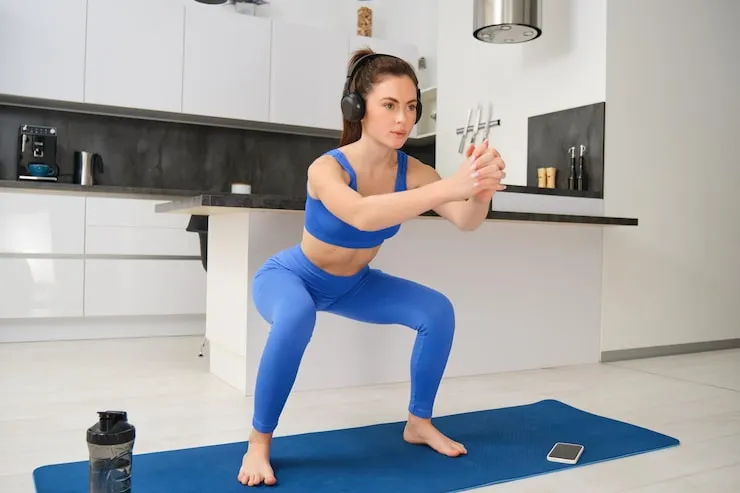
Squats work your thighs, hips, and glutes. Stand with your feet about shoulder-width apart. Keep your chest up and your back straight. Lower yourself down like you are sitting in a chair. Go down as far as you comfortably can. Push through your feet to stand back up.
Your knees should track over your toes. They should not cave inward. For beginners, hold onto a doorframe or counter for balance if needed.
Push-Ups
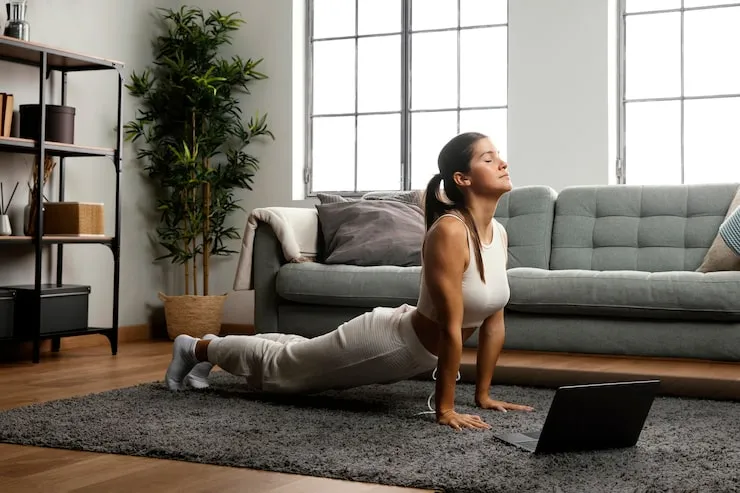
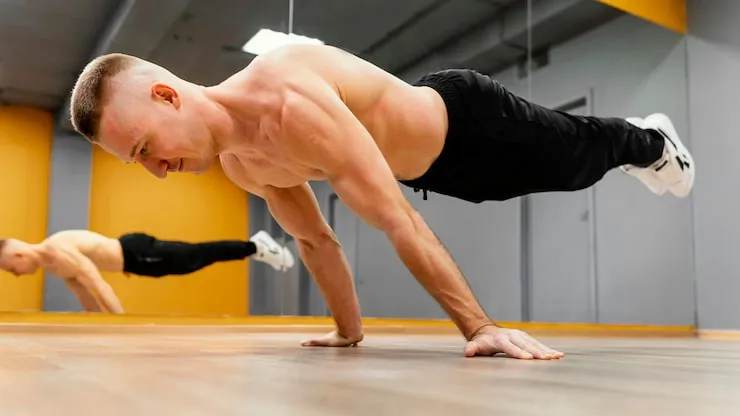
Push-ups build your chest, shoulders, and arms. Start in a high plank position with your hands slightly wider than shoulder-width. Keep your body in a straight line from your head to your heels. Lower your chest toward the floor by bending your elbows. Push back up to the starting position.
If a full push-up is too hard, do them on your knees. Or place your hands on a sturdy table or counter. The higher the surface, the easier the movement becomes.
Planks
Planks strengthen your core and your back. Lie face down. Prop yourself up on your forearms and toes. Your elbows should be directly under your shoulders. Keep your body in a straight line. Do not let your hips sag or rise up. Hold this position while breathing normally.
Start by holding for 15 to 20 seconds. Add five seconds each week as you get stronger. A minute is a solid goal for beginners.
Lunges
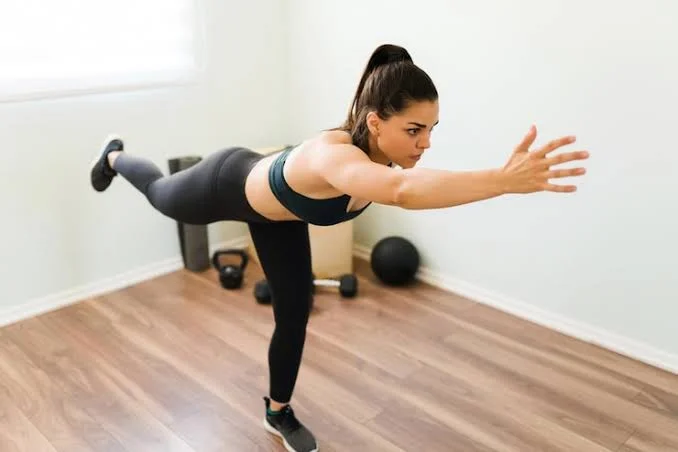
Lunges train your legs one at a time. They also improve your balance. Stand tall. Step forward with one foot. Lower your body until both knees are bent at about 90 degrees. Your back knee should hover just above the floor. Push through your front foot to return to standing. Repeat on the other side.
If you feel unsteady, hold onto a wall or sturdy chair with one hand.
Glute Bridges
Glute bridges work your glutes and lower back. Lie on your back with your knees bent and your feet flat on the floor. Your feet should be about hip-width apart. Squeeze your glutes and lift your hips off the floor. Your body should form a straight line from your knees to your shoulders. Hold for a moment, then lower slowly.
This exercise is gentle on your knees and lower back. It is excellent for people who sit for long periods.
Rows
Rows work your back and biceps. You need something to pull on. A sturdy table works well. Lie underneath the table and grab the edge with both hands. Keep your body straight and your heels on the floor. Pull your chest up toward the table by bending your arms. Lower yourself back down with control.
If you have a resistance band, you can do seated rows instead. Anchor the band to a door or heavy furniture. Pull the band toward your chest while keeping your elbows close to your body.
How To Put It Together?
Do these exercises two or three days per week. Your muscles need rest days to recover and grow.
Starting routine:
- Squats: 2 sets of 10 repetitions
- Push-ups: 2 sets of 8 repetitions (or knee push-ups)
- Planks: 2 holds of 20 seconds
- Lunges: 2 sets of 8 repetitions per leg
- Glute bridges: 2 sets of 12 repetitions
- Rows: 2 sets of 10 repetitions
Rest for 60 seconds between sets. The whole workout takes about 20 minutes.
You May Also Like: Join the 28 Days Workout Challenge For Seniors
How To Know You Are Doing It Right?
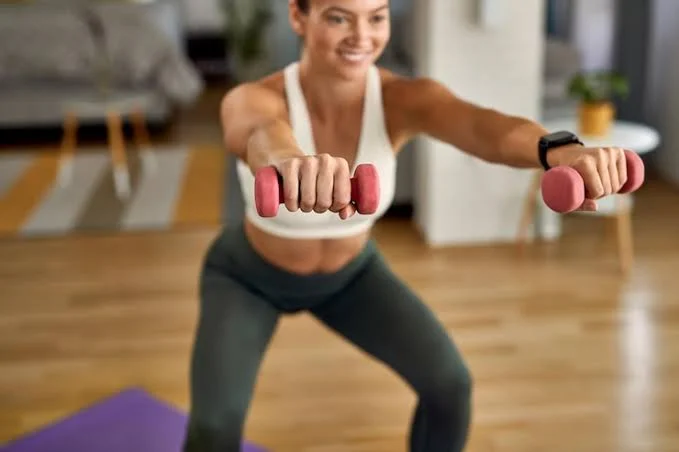
You should feel your muscles working. You should feel mild discomfort in the muscle, not sharp pain in a joint. If you feel pain, stop. Some mild aching is normal when you challenge your muscles in new ways.
Your form matters more than the number of repetitions. Two perfect squats are better than ten sloppy ones. If your form breaks down, stop the set.
How To Make It Harder?
When you can do 12 to 15 repetitions with perfect form and it feels easy, make the exercise harder. You have several options:
-
Add more repetitions. Do 12 instead of 10.
-
Add another set. Do three sets instead of two.
-
Slow down. Take three seconds to lower yourself instead of one.
-
Try a harder version. Move from knee push-ups to full push-ups.
-
Reduce rest time. Rest for 45 seconds instead of 60.
You do not need to change everything at once. Pick one method and apply it for a week or two.
Common Mistakes To Avoid
Going too fast. Beginners often rush through exercises. Slow, controlled movements build more strength and are safer for your joints.
Skipping warm-up. Spend two to three minutes marching in place or doing arm circles before you start. This prepares your muscles for work.
Ignoring rest days. Your muscles grow during recovery, not during the workout. Train two or three days per week, not every day.
Comparing yourself to others. Your starting point is your starting point. Someone else may do ten push-ups on day one. You may start with wall push-ups. Both are valid. What matters is that you progress over time.
Frequently Asked Questions
How long does it take to see results?
Most people notice improved strength and easier daily movements within three to four weeks. Visible muscle changes typically take six to eight weeks of consistent training.
Can I build muscle with only bodyweight exercises?
Yes. Research shows bodyweight training builds muscle when you challenge the muscle close to fatigue. You progress by making exercises harder, not by adding weights.
What if I miss a workout?
Missing one workout is not a problem. Just continue with your next scheduled session. Consistency over months matters more than perfection in any single week.
Do I need to do cardio too?
Strength training and walking are a great combination for beginners. Aim for 150 minutes of moderate activity per week. This can include walking, light cycling, or any activity that raises your heart rate.
Is it normal to feel sore?
Mild muscle soreness for a day or two after training is normal, especially when you start. Sharp pain, joint pain, or soreness that lasts more than three days is not normal. Reduce your intensity or see a healthcare professional if this happens.
Conclusion
You do not need a gym to get stronger. Six simple movements — squats, push-ups, planks, lunges, glute bridges, and rows — train your whole body. Start with two sets of each exercise. Focus on good form. Rest between sessions. When the exercises feel easy, make them harder by adding reps, slowing down, or trying a more difficult version. That is how you build strength at home, one session at a time.